
A bathroom scale gives you one number with no context. An InBody test, sometimes searched as an in body test or InBody scan, breaks that number into muscle, fat and water, which is why it comes up so often when people start a weight plan or a GLP-1 medication.
What is an InBody test and how does it work?
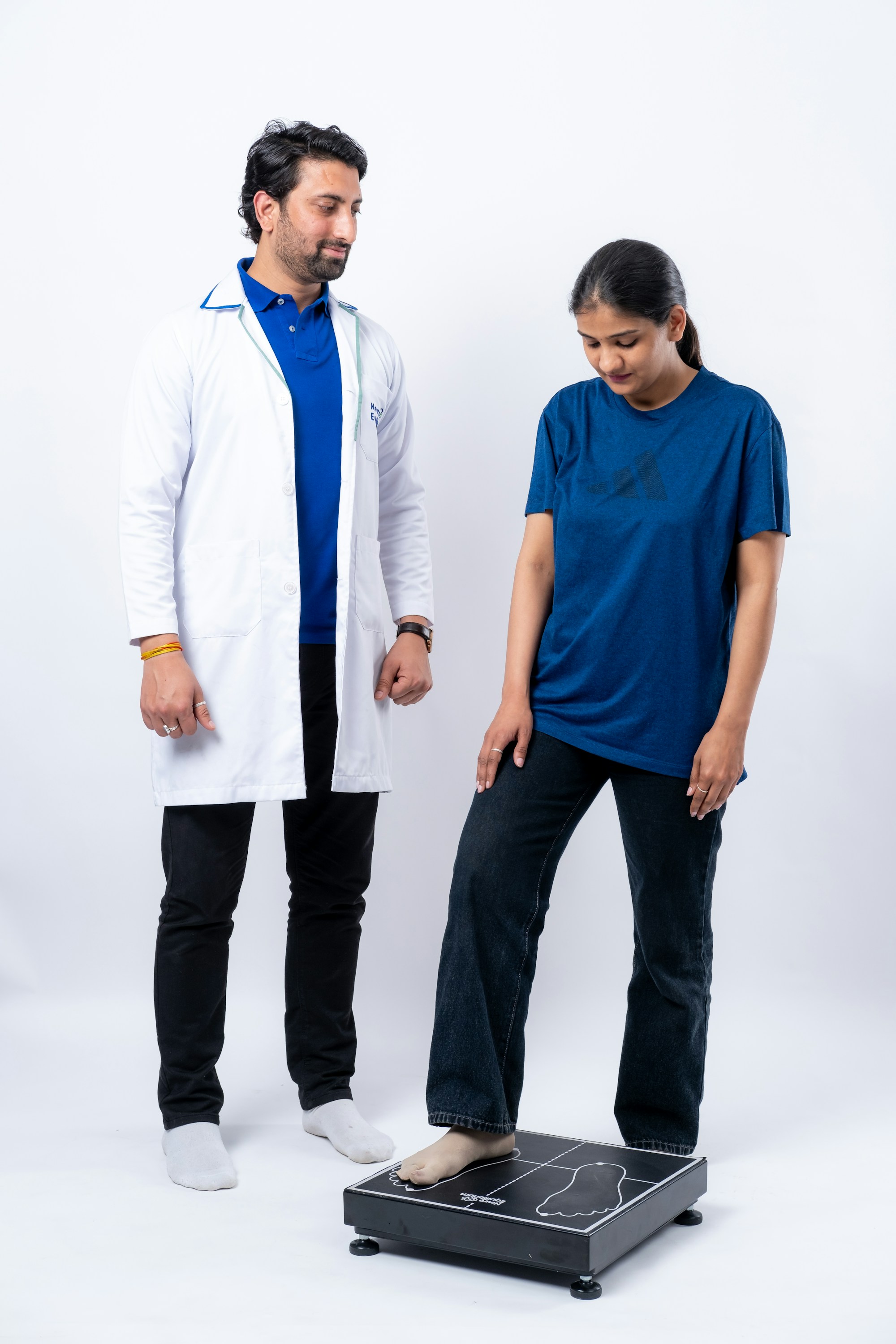
You stand barefoot on the foot electrodes and hold the thumb electrodes while the device measures your impedance at several frequencies, which is the resistance your body gives to the current. From that reading it estimates your total body water, then your fat-free mass, then your body fat.
What's the difference between BIA and InBody?
BIA, short for bioelectrical impedance analysis, is the method. InBody is a brand of device that uses it, with eight contact points and multiple frequencies. At Total Health Systems they're separate services. An InBody scan is $60, takes about 45 seconds and gives you a full-page printout with history. A BIA scan is $50, takes a few minutes and reports body fat percentage, fat-free mass percentage and how water is split between your muscle and the space under your skin.
What do the numbers on your InBody results mean?
These are the main items, based on InBody's result guide:
- Skeletal muscle mass: the muscle attached to your bones.
- Body fat mass and percent body fat: your total fat, and that fat as a share of your weight.
- Segmental lean analysis: how well developed the muscle is in your arms, legs and trunk.
- Visceral fat level: an estimate of the fat around the organs in your abdomen. InBody suggests staying under 10.
- Basal metabolic rate: the minimum calories your body needs at rest.
- ECW ratio: water outside your cells compared with your total body water. InBody lists 0.36 to 0.39 as healthy and advises seeing a physician above 0.39.
- Body composition history: your earlier results for comparison.
How accurate is an InBody scan compared with DEXA?
DEXA, or dual-energy X-ray absorptiometry, is a common comparison point in body composition research. A 2020 study in the Journal of Clinical Densitometry compared three InBody models with DEXA in 67 healthy adults. The InBody devices gave very consistent repeat results. They read body fat lower and fat-free mass higher than DEXA, and the authors concluded they could stand in when DEXA isn't available, as long as that bias is taken into account.
For fat-free mass it was roughly 3.5 to 5 pounds. A smaller shift between two scans may be normal variation.
Source: McLester et al., Journal of Clinical Densitometry, 2020
Your InBody number may not match a DEXA number exactly, so compare InBody to InBody over time. The study looked at healthy adults, and InBody's manual describes its estimated values as intended for healthy subjects, so if you have a medical condition, go over your results with a provider.
What can affect your reading?
Because the scan reads the water in your body, your day matters. InBody's testing guidance suggests:
- Fluids: drink normally the day before and hydrate one hour before your test.
- Meals: wait at least 3 hours after your last meal.
- Exercise: test once you've fully recovered, typically 1 to 3 days.
- Before you step on: use the restroom, and skip lotion on your hands and feet.
- Timing: test at the same time of day every time.
Cosmetic implants, metal implants and low-carb or keto diets can also skew results, so mention those when you come in.
Who should ask a provider first?
How can a scan help on a GLP-1 or a new weight plan?
A scale can show that your weight came down, but it can't show how much came from fat and how much from muscle. A scan early on gives you a baseline, and later scans show where your numbers are heading. Our article on losing fat or muscle on a GLP-1 goes deeper.
If skeletal muscle is trending down, you might look at protein and what you're eating, add strength training on your own and share your printout with your prescriber, since decisions about the medication belong to them.
How often should you repeat an InBody test?
InBody recommends testing every 2 to 4 weeks under the same conditions. Small changes can be normal variation, so look at the direction across several scans instead of reacting to one result.
Where does Total Health Systems fit in?
You can book a standalone InBody or BIA scan. If you want more structure, First Line Therapy is our 12-week lifestyle medicine program, with a health assessment, a personalized nutrition plan, regular consultations, medical-grade nutrition, a transition plan and 6 BIA scans at weeks 1, 2, 4, 6, 9 and 12. Nutrition counseling and primary care are also here if your results raise bigger questions. Our goal is to help you understand what's changing in your body.
This article is general education and is not medical advice. Talk with your healthcare provider about whether a body composition scan is right for you, especially if you have an implanted device or are pregnant, and with your prescriber about any medication decisions.