
GLP-1 medications work largely by turning down your appetite. That is the point, and it is also the catch. When you are eating far less than you used to, it gets easy to fall short on protein, fiber, vitamins, and minerals without noticing. The scale keeps moving, so everything looks fine.
In 2025, four medical organizations (the American College of Lifestyle Medicine, the American Society for Nutrition, the Obesity Medicine Association, and The Obesity Society) published a joint advisory on exactly this problem. Their message is that the medication works better when nutrition and lifestyle are part of the plan from the start, not an afterthought.
Why what you eat matters more when you eat less
A smaller appetite does not shrink what your body needs. You still need enough protein to maintain muscle, enough fiber to keep digestion moving, and enough vitamins and minerals to feel well. You just have fewer bites to get there.
There is a second issue. When weight comes off quickly, some of it is muscle rather than fat. Muscle keeps you strong, steady on your feet, and burning energy at rest. Losing it works against the reason you started.
What to put on your plate
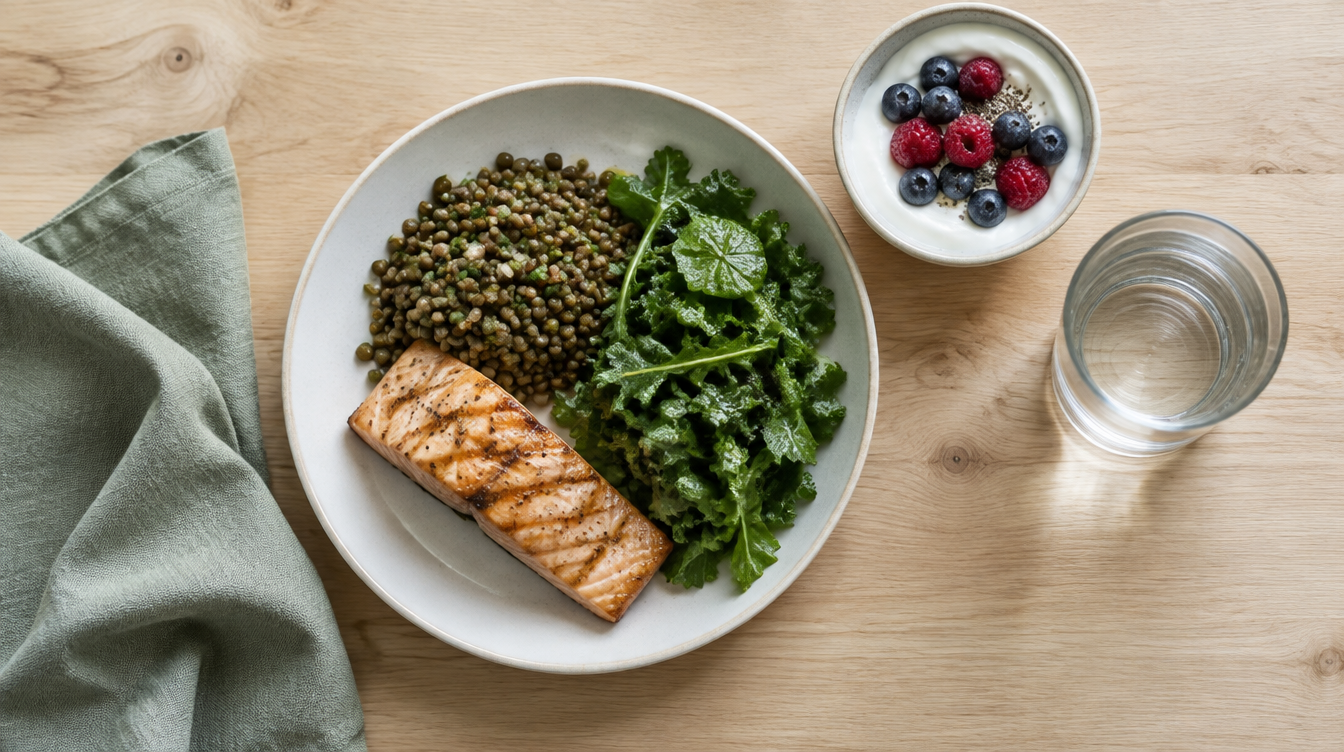
- Protein first. Eat the protein on your plate before anything else, so it gets eaten even if you fill up fast. Fish, eggs, poultry, yogurt, beans, and lentils all count.
- Smaller meals, more often. Small, frequent meals are often easier to tolerate than three large ones, and they make it easier to get the nutrients you need.
- Fruits, vegetables, and whole grains. These carry the fiber, vitamins, and minerals that are easy to miss when portions shrink. Fiber also helps with the constipation many people get on these medications.
- Fluids through the day. Sip regularly instead of waiting until you feel thirsty.
- Less of the low-value food. Refined carbohydrates, sugary drinks, and most fast food take up room without giving much back.
If you regularly forget to eat, the advisory suggests something simple: set a reminder. It sounds odd, but skipped meals add up to missed nutrition.
How much protein you need depends on your size, age, kidney health, and activity level. That is a number worth getting from a provider who knows your history, not from a social media post.
Why protein alone won't protect your muscle
This is the part most people miss. The advisory says that increased protein alone is likely inadequate to preserve muscle without structured strength training. Muscle is kept by using it. Protein supplies the building material, and resistance work is the signal that tells your body to keep the muscle it has.
The same advisory points to strength training at least three times a week, alongside about 150 minutes of moderate aerobic activity. That can be weights, resistance bands, or body weight exercises at home. If you are new to it, start small and build.
If pain or an old injury is what keeps you from exercising, that is worth addressing first. It is the kind of problem our chiropractic and physical therapy teams work with every day.
Managing nausea and other stomach side effects
Nausea, early fullness, and constipation are common, especially as doses increase. Food choices can help. Eat slowly, keep portions small, go easy on greasy or very rich foods, and lean on fiber and fluids for constipation.
Where Total Health Systems fits
Whoever prescribes your medication manages the dose. What often goes missing is the nutrition side, and that is where we can help. Nutrition counseling at Total Health Systems builds an eating plan around your appetite, your schedule, and the foods you will eat.
If you want more structure, First Line Therapy is our 12-week lifestyle medicine program. It includes a personalized nutrition plan, regular check-ins, and six body composition scans, so you can see whether the weight you are losing is fat or lean tissue instead of guessing.
This article is general education and is not medical advice. Talk with your own provider before changing your diet, exercise, or medication.