
Jaw pain, clicking, and a jaw that feels locked are signs of temporomandibular joint dysfunction, usually shortened to TMJ. If you live with it daily, you have probably found a mix of dental splints, exercises, and surgery in your search results. Most people do well with conservative care, and the muscular side of TMJ is where our team can help.
What causes TMJ and jaw pain
- Teeth grinding or clenching, especially overnight or during stressful periods
- Misalignment between the jaw and teeth
- Arthritis in the jaw joint itself
- Injury to the jaw or face
- Poor posture, particularly a forward head position, which pulls on the jaw muscles
- Habits like constant gum chewing
The result is pain or tenderness in the jaw, clicking or popping when you open your mouth, difficulty chewing, and often headaches around the temples or ear pain that is not caused by infection.
Why your jaw, neck, and headaches are connected
The muscles that move your jaw share space and nerve pathways with the muscles of your neck. When your head sits forward over a screen, the jaw is pulled out of its resting position and the chewing muscles work harder to compensate. When you clench, the neck and shoulders tighten along with the jaw. That is why many people with TMJ also carry neck stiffness and tension headaches without realizing the three are linked.
How massage therapy helps
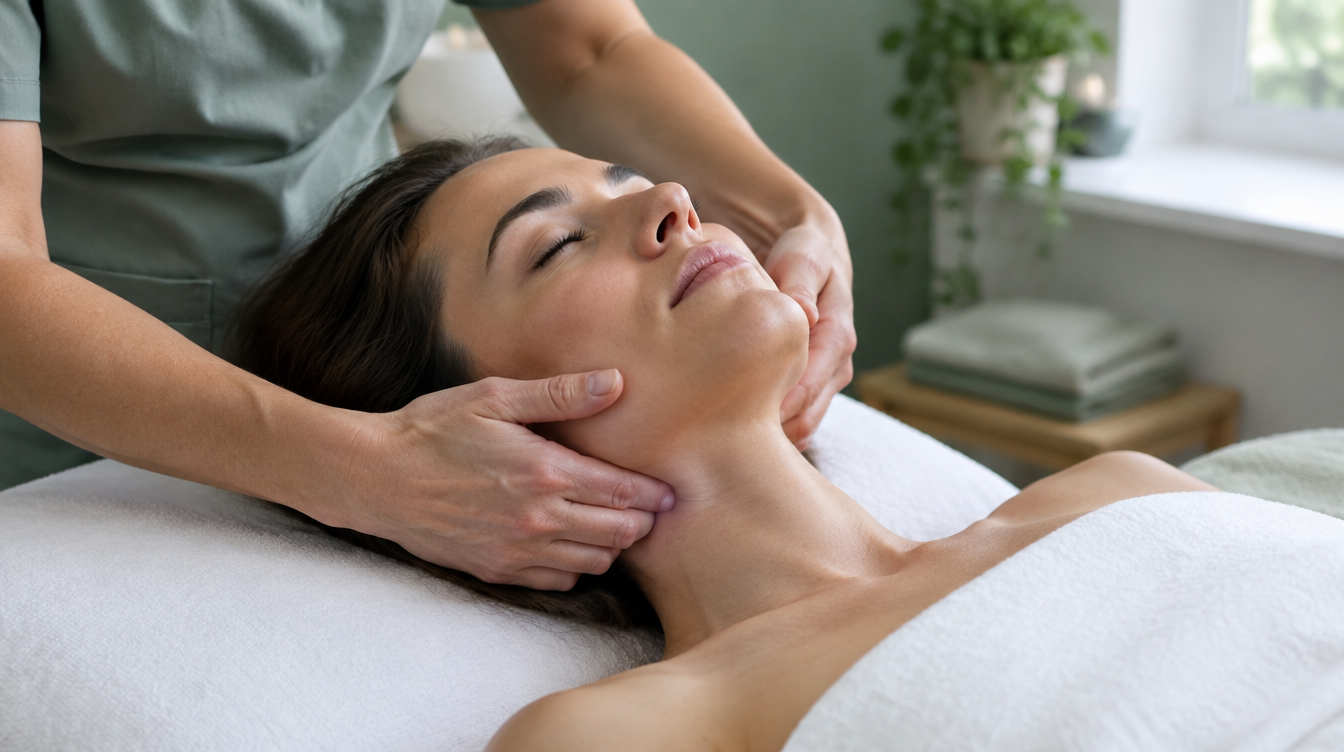
The masseter, temporalis, and pterygoid muscles control jaw movement. When they are tight from grinding or clenching, they pull on the joint. Releasing that tension through myofascial release and trigger point therapy can reduce pain and restore jaw mobility, and it often eases the headaches that come with it.
Several of our licensed massage therapists have training in these techniques as part of our massage therapy services. Most sessions focus on the outside of the jaw, face, neck, and shoulders. Intraoral work, meaning massage inside the mouth, can also help, but we only do this with your direct consent and after discussing it with you first.
Where chiropractic care fits
A chiropractor looks at the other end of the chain: how your neck moves, how you hold your head at work and while driving, and whether stiff joints in the upper neck are adding to the load on your jaw. Care may include gentle adjustments to the neck and upper back, soft tissue work, and posture and desk changes you can make right away.
Our colleagues at Aim High Health in Colorado explain the neck side of this well in their guide to neck pain treatment.
Where acupuncture fits
Acupuncture uses very fine needles at specific points to ease muscle tension and pain. For jaw problems it is often used for two reasons: to calm the tight muscles around the joint, and to help with the stress and poor sleep that drive clenching in the first place.
A fair note on the evidence: research on manual therapy and acupuncture for TMJ is still developing. Studies suggest they can bring relief for some people, particularly in the short term, but results vary. That is why we start with an evaluation and adjust the plan based on how you respond.
What to expect
Your first visit starts with a conversation about your symptoms, when the pain started, and whether you grind or clench. From there, your providers decide together which combination makes sense. Because they work under one roof, your massage therapist, chiropractor, and acupuncturist can coordinate instead of each treating one piece.
Many people notice some improvement after two to three massage sessions. TMJ that has built up over months or years typically takes longer, along with changes to reduce clenching between visits.
Self-care between visits
- Notice when you are clenching during the day, especially at your desk or while driving, and let your jaw relax with your teeth slightly apart
- Apply a warm compress to the jaw before bed if you grind at night
- Skip gum and very hard or chewy foods during a flare-up
- Raise your screen to eye level so your head is not drifting forward
- Practice the gentle jaw stretches your therapist recommends for your pattern
When to loop in your dentist or doctor
Hands-on care addresses the muscle tension and posture behind your symptoms. It does not change how your teeth fit together. If your TMJ is related to your bite, a night guard or dental treatment alongside this care tends to give the most complete result, and we are happy to coordinate with your dentist.
This article is general education and is not medical advice.