
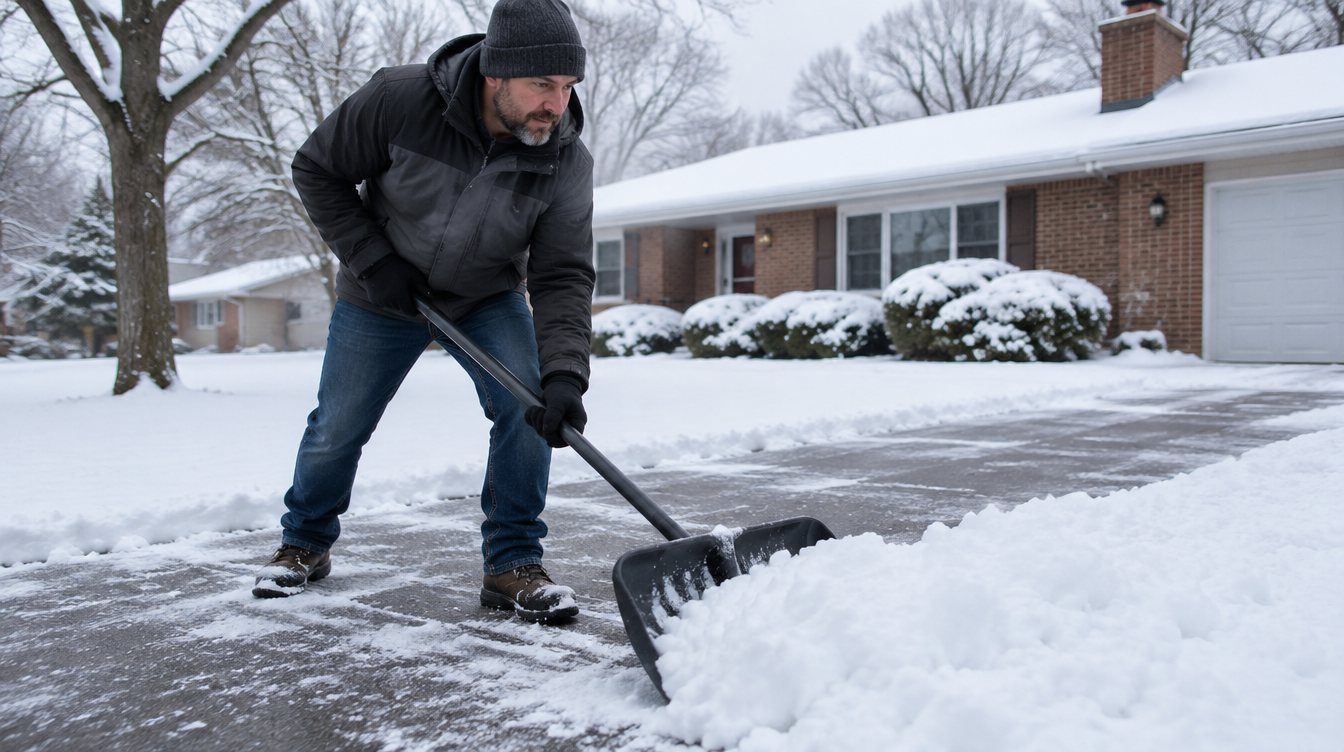
If your back seems to complain more from November through March, you are not imagining the pattern. Plenty of people across Macomb County say the same thing every year. The cause is usually less about the temperature and more about what the season does to your routine.
Why winter is hard on your back
- You move less. Shorter days and cold weather mean fewer walks and more time sitting. Backs tend to stiffen when they are not used.
- You tense up. Hunching your shoulders against the cold and gripping the wheel on icy roads keeps the muscles of your neck and back working for hours.
- You slip. Catching yourself on ice is a sudden, awkward load, even when you do not fall.
- You shovel. For many people it is the heaviest lifting they do all year, done cold, in a hurry, before work.
What the numbers say about shoveling
A national study of emergency department visits from 1990 to 2006 found an average of about 11,500 snow shoveling injuries and medical emergencies treated each year in the United States. The lower back was the most commonly injured area, at roughly a third of cases. Over half of the incidents came from overexertion, and about one in five came from slips and falls.
From a 17-year national study of emergency department visits.
How to shovel without hurting your back
- Warm up first. Five minutes of walking and gentle movement indoors before you head out. Cold, stiff muscles strain more easily.
- Push, don't lift. Push snow to the edge whenever you can. Lifting and throwing is where most strain happens.
- Take small loads. A half-full shovel of wet snow is plenty.
- Bend your knees and keep the shovel close. Let your legs do the work and avoid reaching.
- Turn your feet, not your spine. Step in the direction you are moving the snow instead of twisting to throw it.
- Clear it in rounds. Shoveling a few inches several times is easier on your body than one heavy session at the end of the storm.
- Take breaks. Stop every 10 to 15 minutes, stand up straight, and catch your breath.
If shoveling is more than your body should be doing this year, a snow blower, a neighbor, or a plow service is a reasonable call.
Keeping your back loose through the winter
The simplest protection is to keep moving. A short daily walk, indoors if you need to, and a few minutes of gentle stretching do more than any single product. Dress warmly enough that you are not bracing against the cold, and wear boots with real traction.
When back pain needs a closer look
Most sore backs after shoveling ease within a few days with gentle movement and heat. Book an evaluation if the pain lasts more than a week, keeps returning, or travels into your leg.
How Total Health Systems can help
At Total Health Systems, your chiropractor, physical therapist, and massage therapist work under one roof, so a winter back strain gets a coordinated plan instead of separate appointments across town. Depending on what your evaluation shows, care may include chiropractic adjustments, hands-on soft tissue work, and exercises to rebuild strength.
If this is the third winter in a row your back has flared, it is worth finding out why. Our article on why back pain keeps coming back explains how we approach that.
This article is general education and is not medical advice.