
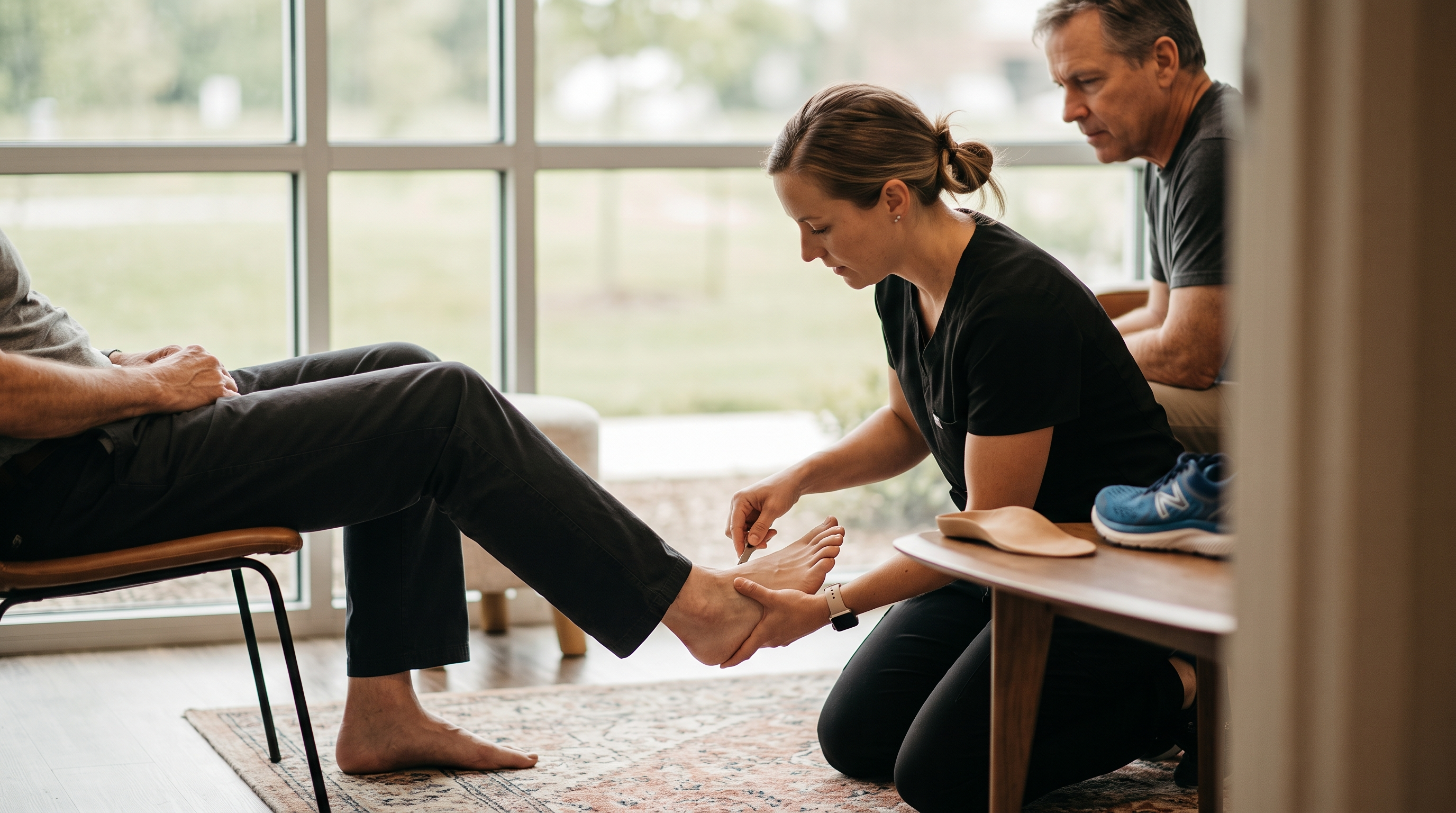
If your feet hurt, your knees ache, or your lower back keeps flaring after long days on your feet, custom orthotics may come up as a possible next step. The confusing part is choosing between store inserts, a podiatrist visit, and a clinical orthotics fitting. They are not the same thing. The right choice depends on your symptoms, your foot mechanics, and whether the problem is simple support or part of a larger movement pattern.
What custom orthotics actually do
Orthotics are inserts designed to support the foot and influence how force travels through the ankles, knees, hips, and lower back. They do not magically fix every pain problem, but they can reduce stress on irritated tissues and improve alignment during standing, walking, and work.
For some people, the issue is the foot itself, such as plantar fasciitis or arch pain. For others, the foot is the first link in a chain that affects the knee, hip, or lower back. That is why an orthotics evaluation should look beyond the shoe.
Store inserts: when they are enough
Over-the-counter inserts can be useful for mild discomfort, short-term support, or replacing a flat factory shoe liner. They are affordable and easy to try. If your symptoms are minor, recent, and improve quickly with basic support, store inserts may be enough.
- Mild arch fatigue after long standing days.
- New shoes that need a little more cushioning.
- Occasional soreness without swelling, numbness, or recurring pain.
- A short trial before deciding whether you need a full evaluation.
The downside is that store inserts are built for categories, not your body. They cannot account for asymmetry, gait, injury history, or how your hips and back respond to your foot position.
When to see a podiatrist first
A podiatrist is a medical specialist for foot and ankle conditions. If you have diabetes, wounds, severe deformity, suspected fracture, major swelling, skin changes, or a surgical question, start there. Those concerns need diagnosis and medical management before support devices are considered.
When clinical custom orthotics make sense
Clinical custom orthotics are most helpful when your foot mechanics are part of a larger movement problem. At Total Health Systems, we look at how you stand, walk, move, and load the rest of your body. The goal is not just to sell an insert. The goal is to understand whether support at the foot will reduce strain somewhere else.
- Plantar fasciitis or heel pain that keeps returning.
- Flat feet or high arches that create repeated soreness.
- Knee, hip, or low back pain that worsens with standing or walking.
- Work demands that keep you on concrete or on your feet all day.
- Sports or exercise pain linked to foot position or poor shock absorption.
Why orthotics can affect back and knee pain
Your feet are the base for everything above them. If the foot collapses inward too much or stays too rigid, the ankle, knee, hip, and pelvis may compensate. Over time, that compensation can increase stress in areas far from the foot.
That does not mean every back problem starts in the feet. It means the feet are worth evaluating when pain shows up during standing, walking, running, or long work shifts. Orthotics may be one piece of the plan alongside chiropractic care, physical therapy, or massage therapy.
What a clinical orthotics fitting should include
- A symptom history that connects foot pain to work, activity, shoes, and prior injuries.
- A foot and posture assessment, including arch type and weight-bearing patterns.
- A movement screen that looks at the ankles, knees, hips, and lower back.
- A recommendation that explains whether custom support is actually appropriate.
- A follow-up plan so the orthotics can be adjusted if needed.
What orthotics cannot do
Orthotics support better mechanics, but they are not a substitute for strength, mobility, or medical evaluation. If your foot pain is caused by an injury, inflammatory condition, nerve issue, or poor footwear, the full plan needs to address that. If your low back pain is driven by weakness or joint restriction, an insert alone will not solve it.
Why Total Health Systems
Total Health Systems offers custom orthotics care inside a multi-specialty clinic. That matters because foot support may connect to plantar fasciitis, flat feet or high arches, knee pain, hip mechanics, and low back stress. Your care team can evaluate the whole chain instead of treating the foot as a separate problem.
We have served Macomb County since 1992, with locations in Clinton Township, Chesterfield, Washington, St. Clair Shores, Center Line, and New Baltimore. If you are not sure whether you need store inserts, a podiatrist, or custom orthotics, start with an evaluation and we will point you toward the right next step.
FAQ
Are custom orthotics better than store inserts?
They can be, but not always. Store inserts may be enough for mild support needs. Custom orthotics are more appropriate when symptoms are recurring, mechanics are more complex, or pain affects the knees, hips, or back.
Do orthotics help plantar fasciitis?
Orthotics may help reduce strain on the plantar fascia, especially when foot mechanics or standing demands are part of the problem. They often work best with stretching, strengthening, and activity guidance.
Should I see a podiatrist or chiropractor for foot pain?
See a podiatrist first for wounds, severe deformity, diabetes-related concerns, suspected fracture, or surgical questions. A chiropractic or integrated clinic evaluation can help when foot mechanics are connected to movement, posture, or back and leg symptoms.