
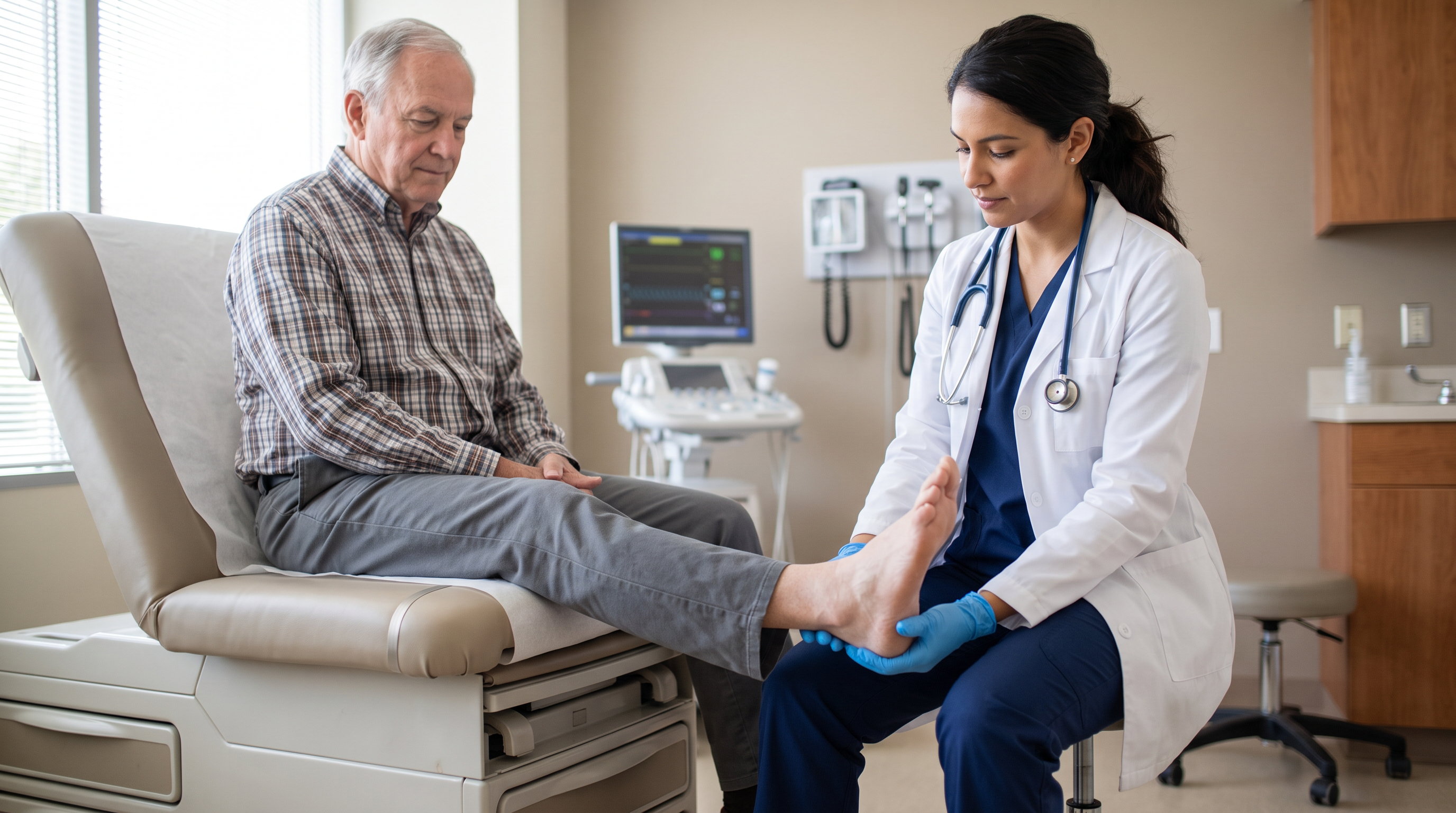
If you have diabetes and you've started noticing burning, tingling, numbness, or sharp pain in your feet, especially at night, you may be dealing with diabetic neuropathy. It's one of the most common complications of diabetes, and it tends to get worse the longer blood sugar stays elevated. Diabetic neuropathy treatment today goes beyond a pain prescription. Here's what actually helps, and how we approach it at Total Health Systems in Macomb County.
What is diabetic neuropathy, and what does it feel like?
Diabetic neuropathy is damage to the peripheral nerves caused by prolonged high blood sugar. It shows up first, and most often, in the feet, and sometimes later in the hands. Common symptoms include burning or electric shock sensations, numbness or a reduced ability to feel pain and temperature, tingling or a pins and needles feeling, and pain that gets worse at night. Because it develops gradually, many people don't notice it until numbness has already set in, which is part of what makes it dangerous. You can injure your foot and not feel it happen.
Can diabetic neuropathy be treated, or only managed?
Nerve damage that has already occurred usually can't be undone, but that doesn't mean nothing can be done. Treatment has three goals: stop the damage from progressing, reduce day to day pain, and prevent the complications, like ulcers and infections, that come from losing sensation in your feet. Strict blood sugar control is the single biggest factor in slowing progression. From there, treatment is typically a combination of your physician's medical management and supportive therapies that address pain and function.
Diabetic neuropathy treatment options at Total Health Systems
At Total Health Systems, we treat diabetic neuropathy with a coordinated, drug-free approach that works alongside whatever your physician has already prescribed. We don't manage your diabetes medication, but we address parts of your care that a prescription alone doesn't reach.
- Functional medicine and nutrition to look past a standard A1C, run a fuller panel, and build a food and lifestyle plan that supports blood sugar stability and nerve health
- Acupuncture to improve circulation to the feet and help modulate nerve pain signals
- Physical therapy to maintain leg and foot strength, protect your balance, and lower your fall risk as sensation changes
- Custom orthotics if diabetic foot changes are also affecting how you walk or where pressure lands on your feet
Daily foot care: protecting feet that can't feel pain
Because neuropathy can take away your ability to feel an injury as it happens, daily foot care matters as much as any treatment. This pairs directly with our guidance on diabetic foot care and orthotics:
- Check your feet every day for cuts, blisters, redness, or swelling
- Keep feet clean and dry, and moisturize to prevent cracking, but avoid moisturizer between the toes
- Never walk barefoot, even at home
- Check the inside of your shoes for pebbles or rough spots before putting them on
- Ask about custom orthotics if you have foot deformities, calluses, or pressure points that standard shoes don't accommodate
When to see a provider about nerve pain in Macomb County
See a provider promptly if you notice new numbness, a foot wound that isn't healing, a foot that looks different in color or shape than usual, or pain that's affecting your sleep or daily activity. Diabetic neuropathy treatment works best when it starts early, before numbness and complications set in. Total Health Systems has served Macomb County since 1992, with six locations in Clinton Township, Chesterfield, Washington, St. Clair Shores, Center Line, and New Baltimore. Our functional medicine, acupuncture, physical therapy, and custom orthotics teams work under one roof, so your care doesn't have to be split across separate offices, and if diabetes management is also part of your plan, our primary care team can coordinate that too.